Looking for a horse property that still feels connected to Albuquerque can be a challenge. You want space, the right zoning, and a setup that works for daily horse care, but you also do not want surprises after closing. If Los Ranchos de Albuquerque is on your list, the good news is that this village has deep agricultural roots and real horse-friendly potential. Here’s what you should know before you buy, and what to check closely as you narrow your options.
Why Los Ranchos stands out
Los Ranchos is not just a place with a rural feel. The village still reflects an older land pattern built around agriculture, irrigation, and animal raising. Many parcels were historically laid out as long, narrow lots called lineas or tripas, designed to keep access to both a road and irrigation.
That matters when you are buying an equestrian property. In Los Ranchos, horse use fits into a broader agricultural identity that the village still supports today. The village even has an Agricultural Program Director whose role includes pairing landowners with farmers and helping preserve agricultural heritage.
Know the parcel shape first
One of the biggest mistakes horse-property buyers make is focusing only on lot size. In Los Ranchos, shape can matter just as much as acreage. Some parcels function like traditional acreage, while others are long and narrow, which can affect where you place a barn, corral, turnout, or arena.
That is especially important on older tripa lots. A property may look spacious on paper, but the usable buildable area can be more limited depending on setbacks, access, ditches, and parcel layout. Before you fall in love with a property, make sure the lot configuration supports how you plan to use it.
Horse-friendly zoning in Los Ranchos
The most relevant zones for many horse buyers are A-1, A-2, and A-3 agricultural-residential zones. These zones support the village’s agricultural character, but they are not identical. Knowing the difference can save you time and help you target the right properties.
A-1 zoning
A-1 allows one dwelling unit per acre. It also explicitly allows accessory structures such as barns, corrals, garages, and animal pens. Agricultural uses in A-1 include the keeping and raising of livestock, along with riding stables and academies.
For many buyers seeking a personal horse setup, A-1 may be the most straightforward fit. It is one of the clearest signals that a parcel was designed with agricultural and animal uses in mind.
A-2 zoning
A-2 allows one dwelling unit per two acres. If you are looking at larger residential-agricultural parcels, this zoning may come up in your search. The lower density can shape what kind of property inventory you find and how the land is laid out.
A-3 zoning
A-3 allows one dwelling unit per three acres and is limited to the Los Poblanos Estates subdivision. This zone also includes special setback flexibility for very narrow tripa lots, which shows how seriously Los Ranchos takes its historic parcel patterns.
If you are considering A-3 property, do not assume it will function like a standard rectangular estate lot. Review the actual buildable envelope early in the process.
AC zoning for commercial equestrian use
If your plans go beyond personal horse ownership, the AC agricultural-commercial zone deserves a closer look. This zone allows equestrian activities, boarding, and training, but it comes with rules.
A property in the AC zone must maintain at least one acre or 66% of the lot area as open space dedicated to agricultural use. The code also states that horse arenas may have up to ten horses in the arena during business hours, which suggests commercial horse operations are possible, but regulated.
Personal use versus more intensive use
Not every horse property purchase involves the same approval path. If you simply want to keep horses for personal use, your questions may center on zoning, structures, fencing, and utilities. If you plan to board, train, or operate at a larger scale, the review process can be more involved.
Los Ranchos’ animal code defines livestock to include horses. It also requires permits for multiple animal sites, professional animal sites, and shelter sites, along with zoning and land-use certification from the village planning department. That makes it important to define your intended use clearly before you write an offer.
Barns, corrals, and existing improvements
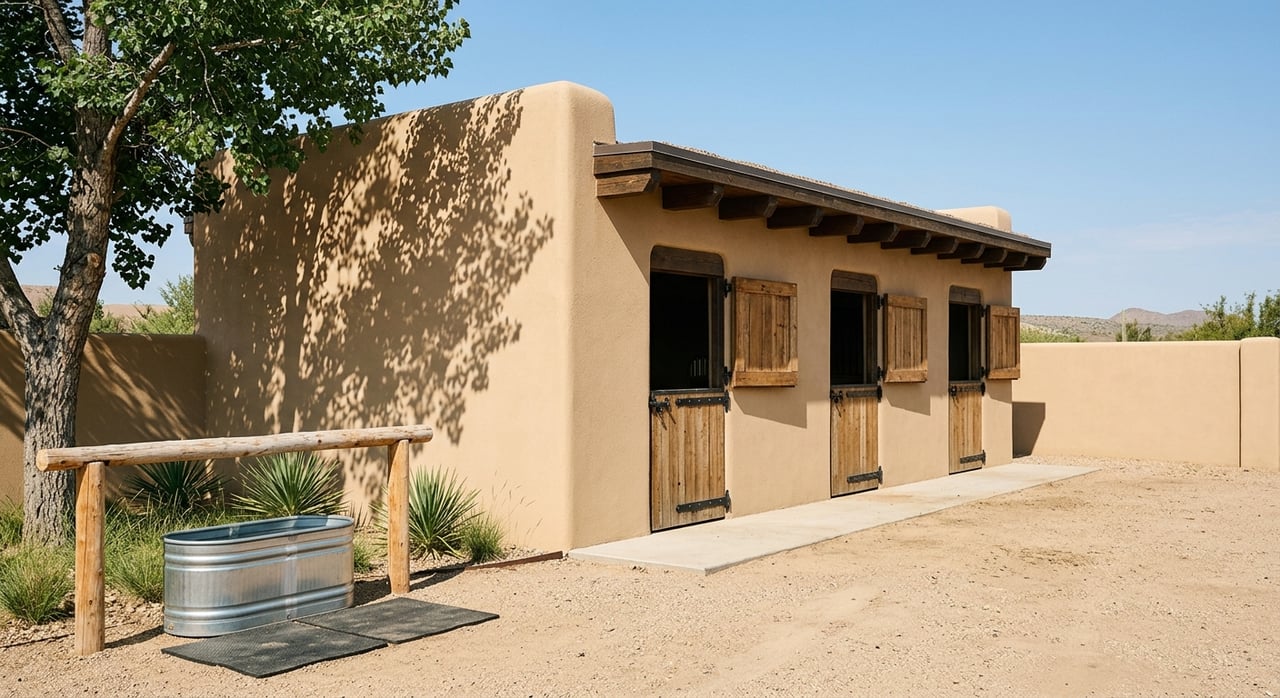
A barn on the property does not automatically mean everything was built or approved the way you expect. Los Ranchos treats barns, corrals, animal pens, and similar accessory uses as normal parts of an agricultural-residential parcel in A-1, but permits still matter.
The village lists building permits, fence permits, parcel permits, excavation or barricade permits, pool permits, and solar permits. The Planning and Zoning Director also acts as the building official, and the village adopts New Mexico construction codes by reference. In practical terms, you should ask whether existing horse improvements were permitted and whether your future plans would require village approval.
Fencing deserves a close inspection
For horse buyers, fencing is never a small detail. You need fencing that works for safe containment, but you also need to know whether it aligns with local requirements.
Los Ranchos allows fences and walls for livestock containment, but the code limits heights near streets and requires a building permit before construction. When you tour a property, ask two separate questions: does the fencing work well for horses, and does it appear compliant with village standards?
Utilities and infrastructure matter
A great horse property is not just about the pasture and barn. Day-to-day function depends on water, wastewater, power, gas, trash service, and irrigation access.
In Los Ranchos, water is provided by the Albuquerque Bernalillo County Water Utility Authority. Gas is provided by New Mexico Gas Company, electricity by PNM, irrigation questions go to the Middle Rio Grande Conservancy District, and trash and recycling are handled by Waste Management of New Mexico. These are practical items to confirm early, especially if the property has existing outbuildings or you plan to add more.
Sewer or septic can shape your plans
Horse buyers should pay special attention to wastewater setup. According to the village’s 2035 master plan appendix, much of Los Ranchos is connected to the ABCWUA sanitary sewer system. However, properties more than 200 feet from a sewer service connection remain on septic systems regulated and inspected by the New Mexico Environment Department.
That difference can affect how you evaluate future improvements. If you are thinking about adding accessory structures, wash areas, or other support features, it is smart to confirm sewer versus septic status and ask how that may affect future planning.
Irrigation, drainage, and floodplain checks
Because Los Ranchos has a strong acequia and ditch network, you should treat drainage and irrigation as core due diligence items. These systems are part of the village’s landscape and daily land use. They also help shape how a parcel functions.
The village notes that stormwater runoff is a major pollution concern, and dumping is not allowed. The Planning and Zoning Director also serves as the stormwater manager and a FEMA-certified floodplain manager, which is a strong signal that buyers should ask where the parcel sits in relation to drainage ditches, low areas, and any floodplain constraints before assuming a future barn or arena site is buildable.
Riding access is part of the appeal
Los Ranchos offers more than private horse facilities. The village’s ditch and acequia network is also part of the local riding landscape. Master plan materials note that the ditches are used by pedestrians, equestrians, and bicyclists, and the Del Norte Open Space includes pedestrian and equestrian paths.
The broader master plan appendix also says Los Poblanos Open Space has trails around the fields. If riding access matters to you, that local context can be a meaningful advantage when comparing Los Ranchos with other acreage areas.
What to ask during a showing
When you walk an equestrian property in Los Ranchos, it helps to think beyond the house. A calm, detailed review up front can help you avoid expensive surprises later.
Showing checklist for horse buyers
- Confirm the zoning and ask whether your intended horse use is allowed by right.
- Ask whether your plans could require AC zoning, a special permit, or an animal-site permit.
- Verify the lot shape and buildable area, especially on older tripa lots.
- Identify nearby irrigation ditches and ask how they affect access, drainage, and layout.
- Ask which structures were permitted, including barns, corrals, fencing, and other outbuildings.
- Confirm whether any future fence or barn plans would need village approval.
- Check whether the property has practical, compliant livestock containment fencing.
- Confirm the water source, irrigation setup, and utility providers.
- Verify whether the property is on sewer or septic.
- Ask about drainage patterns, low spots, and any floodplain concerns.
- Discuss manure handling, storage, and disposal practices.
Why local guidance helps
Buying an equestrian property is different from buying a typical suburban home. You are evaluating the house, the land, the access, the improvements, and the rules that shape how you can use the property.
In Los Ranchos, that means paying close attention to agricultural zoning, historic lot patterns, infrastructure, and day-to-day land function. A clear process and careful questions can help you move forward with confidence, especially if you are balancing lifestyle goals with practical property constraints.
If you are thinking about buying an equestrian property in Los Ranchos, working with a calm, informed local guide can make the process much easier. To talk through property types, zoning questions, and what to look for on showings, reach out to Alfred Unser.
FAQs
What zoning should you look for when buying a horse property in Los Ranchos?
- The main horse-friendly agricultural-residential zones are A-1, A-2, and A-3, while AC zoning may be relevant for more intensive equestrian uses like boarding or training.
What is a tripa lot in Los Ranchos de Albuquerque?
- A tripa lot is a long, narrow parcel pattern that was historically designed to provide access to both a roadway and irrigation, and it can affect usable buildable space for horse improvements.
Do barns and horse fences need permits in Los Ranchos?
- Los Ranchos lists building and fence permits among its permit requirements, so you should verify whether existing improvements were permitted and whether future work will need village approval.
Can you keep horses for personal use in Los Ranchos?
- Los Ranchos zoning allows livestock uses in key agricultural-residential zones, but you should still confirm that your intended horse count and use fit the property’s zoning and any permit requirements.
What utility questions matter when buying a Los Ranchos horse property?
- You should confirm water service, irrigation access, gas, electricity, trash service, and whether the property is connected to sewer or uses a septic system.
Why should floodplain and drainage be checked on a Los Ranchos equestrian parcel?
- Drainage ditches, low areas, and floodplain constraints can affect where you place barns, arenas, and other improvements, so they are an important part of due diligence in Los Ranchos.